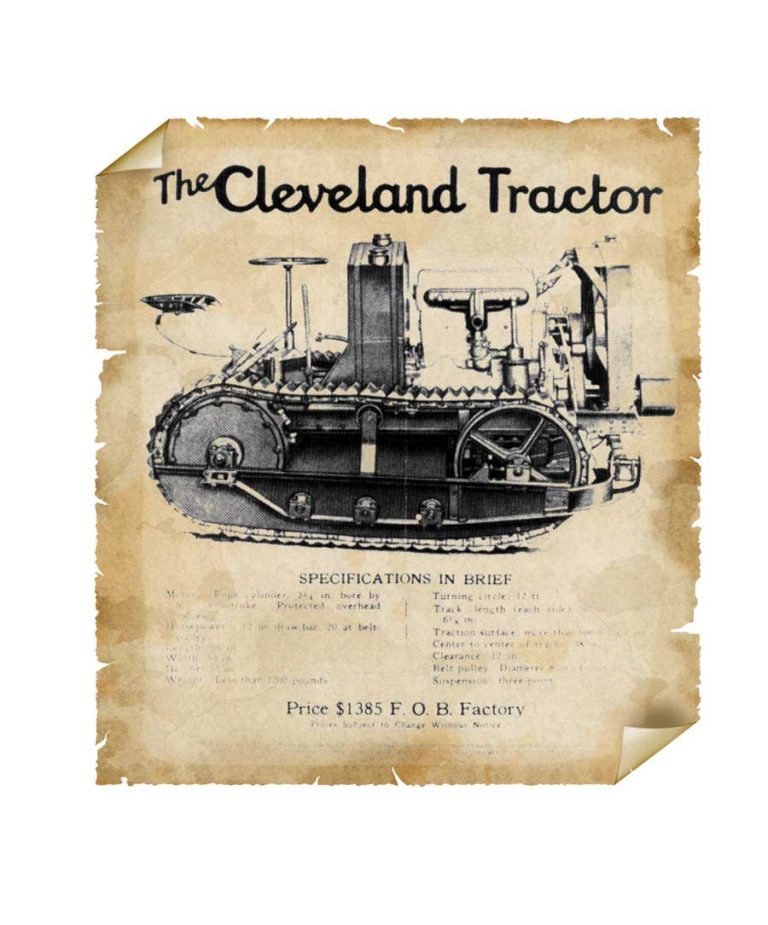
In 1920 the tractor-selling business was different than today, as Earl B. Stone, assistant advertising manager of Cleveland Tractor Company, wrote inIs There a Summer Market for Tractors?
“A few years ago, perhaps a year ago, the majority of tractor dealers would have questioned a yes (for, “Is there a summer market for tractors?”),” he wrote in a 1920 article. They were willing to take tractor business as it came, hoping for two or three months of active tractor sales at the most and satisfied to take the profit from these short seasons as their year’s tractor earnings.
“But the development of the true power farming dealer and improvements in tractor design have combined to put an end to seasonal tractor sales: The up-to-date tractor dealer looks upon his former limited selling season as nothing more than busy months in an ever-busy year.
“The true power farming dealer, whether he comes from the ranks of the old established implement dealers or from the newer automotive fields, is considerably more than a retail merchant. In the first place, he has something more than a tractor or a plow or a hay loader or a grain separator to sell the farmer. He has a power farming service to sell – a service which, once installed, will do the farm work better, cheaper and quicker than it can be done with horses and at a lower cost for labor and which, at the same time, will insure larger crops and a bigger bank balance at the end of the year.”
This is done, the article explains, by going out into the June and July “hot horse- killing work” time, and showing the farmer that a Cletrac will get the work done in better shape and in less time than any other method. “The tractor’s ability to do the heavy work of summer and early fall is exactly as good a reason for its purchase in July as its plowing ability is the reason for a purchase in April,” Stone wrote.
“There are other summer jobs, not all of them farm work but all done by farmers, which can be made to show the farmer that he can afford to buy his tractor in mid-summer,” he continued. “Country road taxes can be worked off or road bounties realized between the haying and harvest seasons, new ditches can be run, hog fences set in place – jobs that the farmer must do somehow present themselves in almost numberless variety to the enterprising tractor dealer’s advantage.”
But the greatest reason for tractor sellers to be aggressive is to show that their tractor, in this case Cletrac, has a “natural ability to work in every season, under the widest variety of conditions and on all sorts of farm jobs. If he is selling a tractor which meets these requirements he can be sure of a summer market and a winter, spring and fall market as well.” FC
Read more about the Cleveland Tractor Company: “Cleveland Tractor Company: Ohio Family Starts and Ends with Cletrac.”
Bill Vossler is a freelance writer and author of several books on antique farm tractors and toys. Contact him at Box 372, 400 Caroline Ln., Rockville, MN 56369; e-mail: bvossler@juno.com.