
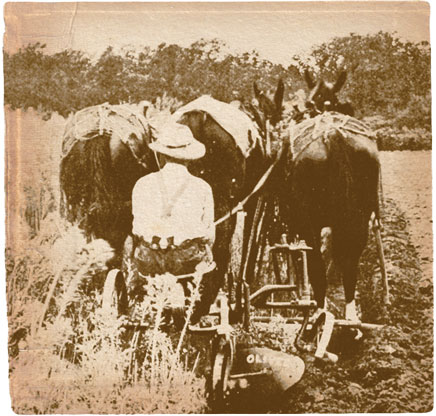


Most Farm Collector readers have heard of Oliver farm equipment and many will agree Oliver plows were among the best on the market during the last half of the 19th and the first half of the 20th centuries.
Not too many, however, know much about James Oliver, the Scotsman who started the Oliver Chilled Plow Works.
James Oliver was born Aug. 28, 1823, in Roxburyshire, Scotland, the youngest of eight (two girls and six boys). His father was a shepherd on a big estate and was dirt poor. In 1830, James’ oldest brother immigrated to America, where he got a job paying $1 a day, a sum unheard of back in Scotland. Soon the next two Olivers, a boy and a girl, followed their brother to America and also found gainful employment.
The elder Oliver was content to be nothing more than a lowly shepherd, but Mrs. Oliver insisted the rest of the family make the journey to America. The oldest three children sent money to pay off debts for the trip and in 1834 the rest of the family boarded a sailing ship for America.
After a rough passage in which everyone was seasick, the ship’s passengers reached New York. The Oliver family went up the Hudson to Albany on a steamboat, rode the railroad to Schenectady and took the Erie Canal to Geneva, where their brothers and sister awaited them.
A story is told of James, who was unfamiliar with American food. There was no Indian corn (or maize) in Scotland, where wheat was then called “corn.” The first time young James was served corn on the cob, he thought it was a new way of cooking beans. After cleaning the “beans” off the cob, he asked to have it refilled.
All the Oliver kids went to work. Even 12-year-old James got a job helping a local farmer for 50 cents a week plus board. Two years later, word came to Geneva that in Indiana, the government was giving farms to anyone who would clear and settle the land. It was too good an opportunity to pass up, so the entire Oliver family, along with many others, set out for the “Far West.”
They ended up in Mishawaka, Ind., where James went to school for one winter, his only formal schooling. The next autumn, after pining away for his native Scotland, the elder Oliver died and James had to quit school and go to work. He worked for farmers and as a pole man on a riverboat before getting a job in an iron foundry, where he learned to smelt and mold iron.
Young Oliver met a girl named Susan Doty who helped him learn to read and eventually they fell in love. The Doty family didn’t think James was much of a catch, but when he bought (for $18) a small but comfortable 2-room slab house with a pounded blue-clay floor, they relented and approved the marriage.
Susan and James were married in May 1844. He continued working at various jobs such as iron molding, coopering and farming. He bought a quarter section of land and built a bigger house to hold the children he and Susan had: Joseph (who was called J.D.) and Josephine.
In 1855 Oliver heard of a man in South Bend who wanted to sell a half-interest in an iron foundry. He and a friend, Harvey Little, each bought a quarter of the business; one account says Oliver paid just $88.96 for his share. Six weeks later the foundry was severely damaged by flooding on the St. Joseph River, but by November the firm was back in business, and Oliver and Little bought out the original owner, renaming the company the South Bend Iron Co.
The partners made almost anything that could be made from cast iron, including plows, but Oliver, having had some experience walking in a furrow, realized the plows they made weren’t very good. The cast iron plows of the day were heavy and didn’t scour well. Dirt stuck to the moldboards’ porous surface, which also was soft and wore rapidly. One rival plowmaker went so far as to nail a leather pocket to the beam of each of his plows, complete with a wooden paddle for scraping away the dirt. Oliver supposedly said: “I give no paddles, because I do not believe in them, either for punishment or plow use: My plows and my children do not need paddles.”
Although steel plows had been developed, steel was still scarce and expensive. Chilled cast iron was much cheaper, almost as hard and would scour nearly as well as steel. However, chilled iron was brittle and it was difficult to keep the castings from warping during the chilling process. After extensive experimentation, Oliver discovered a way to chill just the face of his plowshares and moldboards. That gave the soil-contacting surfaces a hard finish that would take a shine and wear well, while the remaining parts were softer, tougher and more break-resistant. Warping was much easier to control as well.
Oliver and Little received a patent for the process in 1857 and their new plows became quite popular. In 1860, the factory burned but they rebuilt and continued to expand. By the end of the Civil War, the plant was working to capacity and Oliver’s son, J.D., had entered the business.
In 1876, a new factory with a 600 hp steam engine went into production. More than 400 employees produced 300 Oliver plows every day. By the time Oliver died in 1908, his plows were at work in the British Isles, Japan, France, Germany, Mexico, Sweden, Greece and several South American countries. Company advertising bragged that Oliver was “Plowmaker to the World.”
J.D. Oliver took over the reins of the Oliver Chilled Plow Works (as it was by then called) and its string of successes continued for two more decades. But that’s a story for another day. FC
Sam Moore grew up on a farm in western Pennsylvania. He now lives in Salem, Ohio, and collects antique tractors, implements and related items. Contact Sam by e-mail at letstalkrustyiron@att.net.


