
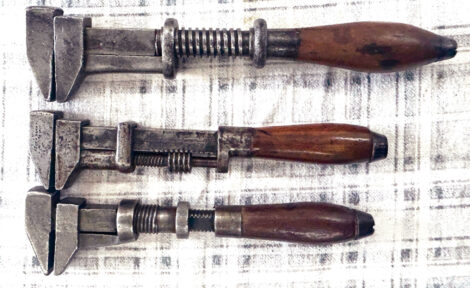
Wrenches are an integral part of everyone’s toolbox. But as anyone who’s worked on farm equipment can tell you, not just any wrench will work for any job. Over the years, manufacturers have developed wrenches of different sizes and shapes, for a wide variety of tasks. Each wrench has a unique purpose and its own story to tell.
The rise of wrenches
The earliest wrenches and tools came to the United States from Great Britain. However, by the mid-1800s, the Industrial Revolution was in full swing in America. With the advancement in machinery, mass production, and a plethora of new inventions, new tools and wrenches needed to be created to maintain and support these advancements.
Henry King of Springfield, Massachusetts, patented the first adjustable wrench in the U.S. in October of 1832. In the late 1800s, there was a constant stream of “improved” wrenches that offered quicker adjustments, with a variety of designs. Seemingly every town in America had a foundry or machine shop. Inventors could conceive an idea, build a prototype of their invention from wood or brass to prove the concept, and apply for a patent. They would then contract a shop to manufacture and distribute the wrenches.
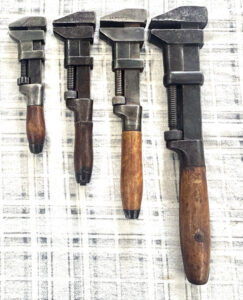
Over time, companies developed and employed new materials to craft wrenches, starting with sand castings of malleable iron, eventually moving to cast steel, and finally to forged alloy steel. These improved materials were stronger, increasing the longevity of the tools, and allowing manufacturers to offer lifetime guarantees on their wrenches. Simultaneously, materials improved in fasteners – like nuts and bolts – which allowed them to change from square heads to hexagonal heads, and naturally, wrench configurations followed suit.
Advertising was difficult at that time, so most of the marketing for these new wrenches was through word of mouth. If the wrench design was good and the entire initial production run sold out, the inventor would order another batch of wrenches to be produced, sometimes with slight changes or improvements. This process of tweaking and improving resulted in the variations encountered today, where there may be two wrenches of the same type produced by the same manufacturer but having slight differences based on which batch they came from.
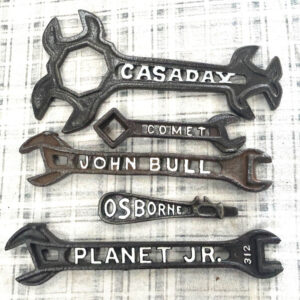
Oftentimes though, some of the new wrench designs wouldn’t sell well enough to justify further production, and the inventor would move on to other endeavors. For this reason, early wrenches are extremely hard to find today and are highly sought after. Contributing to the scarcity of these early wrenches were the outbreaks of the world wars. Citizens would donate unused farm machinery – including old wrenches – to metal scrap drives where the material could be repurposed for the war effort. This further depleted the ranks of old, unique wrenches.
Not all wrenches were lost to scrap drives or the passage of time. Many lived on in tool kits or were still used for various machines. The wide variety of manufacturers, applications, and uniqueness of design naturally lead to people starting to collect them. That is how the Missouri Valley Wrench Club was formed.
Founding the Missouri Valley Wrench Club
Thirteen individuals from the Midwest, all with a common interest in antique wrenches, got together in May 1981 to form a club devoted to the preservation, research, and collection of antique wrenches.
During that first year, the members used a round-robin newsletter system to share information. At the following spring meeting held in Uehling, Nebraska, on June 6, 1982, the club decided to drop the round-robin letter system and adopt a quarterly newsletter, featuring a trade-and-sell column and including descriptive articles by one of the original members.
That first newsletter was a simple, one-page publication, and today it has progressed to a digitized newsletter, edited by club members Dan and Deb Gaier, with plenty of color photographs, informational articles, and a calendar of future club meetings and wrench auctions. It’s an educational resource to inform readers about all types of wrenches and their history.
The Missouri Valley Wrench Club today has 275 members from the U.S., Canada, England, and Australia. Members collect all kinds of wrenches, including monkey wrenches, buggy wrenches, pipe wrenches, and any other kind of wrench they find interesting!
Specialized wrenches
Many members specialize in collecting specific brands or manufacturers. Some collectors have a particular interest in wrenches that were included with farm machinery such as horse-drawn plows, cultivators, and planters. Steam traction engines and gas tractors were often sold with special-purpose wrenches for repair and maintenance, too. Sometimes, there were even unique wrenches included with automobiles, motorcycles, and bicycles.
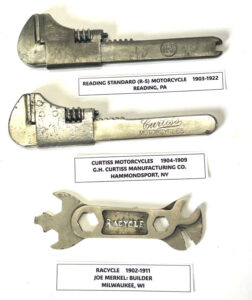
Antique wrenches have a charm of their own and serve as a snapshot that preserves an image of the past. Their history, craftsmanship, and unique designs not only immortalize the past, but also lead to engaging conversation and camaraderie today.
The wrench-collecting hobby
Getting into the hobby of collecting wrenches is easy. A great place to start is at local antique shops, flea markets, auctions, online marketplaces, and, of course, tool collector club events. Joining a tool collector group can allow people to see a wide variety of historic pieces but, more importantly, allows members to interact and share history as well as fellowship.
One of the best ways to find antique wrenches is by networking with other collectors. These communities and clubs offer a wealth of knowledge and valuable connections. They can also help with finding the identity and history of the wrench. In general, though, to identify an antique wrench, start by examining its shape, size, and design. Many wrenches are unique and some even feature interesting cutout designs. Look for any markings, logos, or patent dates that might reveal the manufacturer.
Rusty or worn wrenches can make identification difficult, so carefully cleaning the wrench may reveal hidden clues. Many collectors clean their wrenches with a fine wire brush, then apply a coat of preservative and highlight any lettering with paint. These techniques ensure that the wrench’s history is preserved and that it remains identifiable. It’s important to protect antique wrenches so they can be displayed and enjoyed by future generations.
The more you collect, the larger the variety you’ll realize is out there. Be patient when searching for any particular tool, as finding the perfect wrench requires persistence, patience, and sometimes just good luck. Don’t hesitate to consult fellow collectors and experts, especially when you come across a piece with unique markings or an unknown origin. Sharing your wrenches and experiences is what collecting is all about, and collaboration with fellow collectors can also lead to valuable insights and new discoveries of the past.
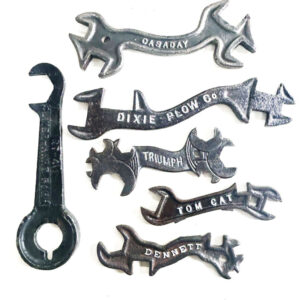
As you delve deeper into the world of antique wrenches, it’s important to remember that they were produced in many variations and designs. Explore different types of antique wrenches such as chain, monkey, pipe, and combination wrenches, and remember that one design could come in a range of sizes. Evaluation of an antique wrench involves considering factors such as rarity, age, condition, and the presence of any distinguishing features, such as unique or patented designs. Rare wrench types or those from highly sought-after brands can command considerable interest.
Early wrenches, of course, are difficult to find, but they’re also more likely to be rare and quite valuable. Wrenches in good condition, free of rust, damage, or repairs, are generally more valuable than those with visible wear. Regardless of condition, though, each wrench tells a story, whether that be of the company that produced it or the owner that used it.
Keep in mind that some wrenches may be in poor condition, but don’t let that deter you. With some research and reference from reliable sources like the DATAMP (Directory of Tool and Machinery Patents), you’ll be able to identify the patent dates, inventor, and manufacturer of the wrench. Remember, Rome wasn’t built in a day, and a collection isn’t put together overnight. It takes time and patience, but the journey of discovery and the people you meet along the way is part of the allure of collecting.
Organizing your collection once you’ve built it up can be challenging given the many variations of wrenches. The website 45 Spaces has a listing for Vintage Wrenches that is constantly being expanded and currently includes over 8,500 different wrenches of all types. This is a great resource to help you organize your collection in a logical fashion, whether that’s by type, age, size, or manufacturer.
Support from the Missouri Valley Wrench Club
The Missouri Valley Wrench Club connects collectors and enthusiasts who share knowledge and expertise on antique wrenches. Engaging with community members can help you learn more about many historical pieces, the best ways of preservation, as well as many other unexpected life lessons.
The Missouri Valley Wrench Club has been in existence for 44 years and is open to any individual interested in wrenches, whether you’re a serious collector or just interested in learning more about the history of wrenches. The club holds one-day meetings twice a year in spring and fall where members can buy, sell, or display their wrench collections. Meetings end with a banquet followed by a presentation. Dues are only $30 a year. Go to the club’s website at MVWC.org to find a membership application and join the MVWC today to begin the adventure of wrench collecting!
Special thanks to Dan and Deb Gaier for the photos and information of the MVWC and antique wrenches! FC
Kippen Miller is a freelance writer and editor who often works on books of many genres. You can reach him at kippendmiller@gmail.com


