

My father was a believer in the McLean County, Ill., system of raising hogs on clean pasture. There was a well approximately in the center of his 160-acre farm. Each year he would have a clover field cornering against the well. He did that to be able to get water to the hog waterers by pipe or hose.
These pens were fan-shaped, 20 rods deep from the corner of the field. But as the three pens were only 16 feet wide at the narrow end, and as the hogs had a built-in roto-rooter attachment, the area in the point of the pens became big mud holes, which made getting feed and the hog buildings in and out of the pens difficult, especially when it was muddy. Evidently he decided to change the system, stringing the pens out so the hog waterers and feeders would be more isolated. He had to get water to the hogs some other way.
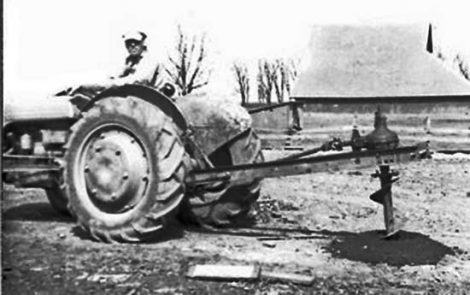
And that meant a lot of temporary fence every year. Anyone who has used a hand post auger to make postholes knows it is not an enjoyable job. In early 1943, Dad took a Model T rear end, a part of a car frame, a cut-down Gleaner combine auger, an IHC sliding PTO shaft — all of which he had on hand or got at the Mose Levy junkyard — up to Waggoner Welding in Washington (Dad did not have a welder) and got them welded into a posthole digger. He bolted that to the lift arms of his 9N Ford-Ferguson tractor to be able to raise and lower the auger.
It did dig postholes a lot faster and easier than you could do the job by hand. This was before 3-point posthole diggers existed. It had a tendency to corkscrew under certain conditions. It could also do a number on field tile. When you saw red tile chips coming up when boring a posthole, it did not help your humor because you knew you would then have to get a spade and dig it out by hand and fix the tile.
Recycling a roadster
The local loan company had repossessed a 1929 Model A Ford roadster. It ran and was cheap so my dad bought it. The reason it was cheap was because the former owner did not take his loss very well. He had gone out with the sledge and pounded all four fenders down to the tires. Dad got it home and pounded the fenders back up but that just made it usable, not good looking.
One of my early memories is of my dad in the corncrib with a cold chisel and a big hammer cutting off the roadster from just back of the top bows to over the fenders, down to the sub-frame back of the fenders. He bolted a Model T pickup bed on to it. He used that for a pickup until September 1940, when he bought a 1930 Model A Ford pickup. He put the ’29 Roadster pickup up above in the barn, I suppose to get it out of sight of the scrap drives.
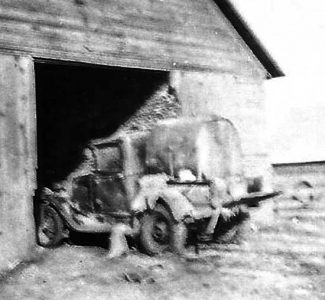
In November 1942, he got the old pickup down and used it to haul feed and water to the hogs. He kept his hogs out in the clover field one-quarter to two-thirds of a mile from the rest of the outbuildings. He said it was easier to haul feed and water and let the hogs spread the manure on the crop ground, and you did not lose the nutrients that way with all those hog pens in the clover field. The hogs were healthier in the clover field than a muddy lot. Ground feed was sacked in burlap bags each morning and stacked on the fenders and hood. Most mornings there were a dozen bags to fill. This meant your clothes were covered with ground feed as the burlap bags fogged.
“Repair only the essentials!”
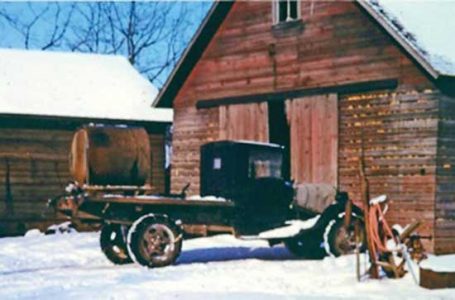
A water tank was added. It was a little over 3 feet in diameter and about the same length. It weighed more than 1,500 pounds; a Model A pickup was rated to carry 500 pounds. Soon there were broken spring bolts and broken front and back frames over the springs. The water tank got to leaking, so Dad tried to keep black roofing tar on it. In hot weather, the hogs found out about the leaking water and packed under the pickup to lie in the wet spot. It was something to get them to move so they wouldn’t get run over. Eventually we would have to take the tank to the welding shop to get it patched.
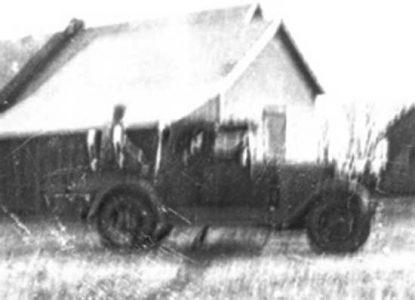
In freezing weather we also hauled cobs and wood to fuel the tank heaters. Dad usually tried to have the waterers beside the fence line so you did not have to drive in the pen with the pigs.
To move this load around with some ease he had installed a 4-speed transmission with a super low in the pickup. Dad ran 6-inch-by-17-inch 6-ply rear tires with chains all year ’round. In the spring he would get stuck in a mud hole and ram back and forth to get it out, sometimes tearing the ring gear out of the rear end. At that time you just went to the Sorrel auto salvage in Washington and got the complete rear end and put it on. Of course he did not fix anything that was not essential to keep it running, so no brakes and no lights. The front bumper fell off; you had to put that back. If the bumper hit a hog he would jump out of the way. If the tire hit the hog, it would take him down and run over him. And with no brakes, you couldn’t stop.
Rough but always ready
I don’t know how Dad did it but he kept it going. Even in cold weather and pouring rain, the truck ran every day. He always cranked it. Sometimes he would burn a bucket of cobs under the engine to warm it up. In the winter he would put a side curtain on the passenger side. Those who helped with chores and opened gates just stood on the running board and held on to the top bows. Dad had many pens for his hogs. I believe at one time we had 15 or 18 gates to open and close each morning, with the pigs there to help of course.
When Dad cranked the engine, our dog always jumped in the passenger seat and rode there. No one argued because every summer the bumblebees made a nest in his side of the seat. This was fine until September, when the weather started to cool down and they got cranky. They would even run the dog out. So that night Dad would take out the seat, pour some gas on their nest and that was the end of them.
This is one of the first vehicles I learned to drive and also crank to start. When picking corn, Dad went to the field early and left Mom and me to do the hog chores before school. The water pump always leaked, so the chore truck was always drained in cold weather. Mom and I filled up the radiator and off we went. As we fed the hogs, the truck got hotter. By the time we got back to the house it was really hot. So we decided to cool it down and put the hose in the radiator. I can still hear the cracking and popping of that engine. We forgot to shut off the drain petcock. I think Dad had to go to Sorrel’s to round up another engine. Mom and I usually had some disaster like this when doing chores at corn-picking time.
Making do with what you have
That rig ran until some time in 1952, when Dad got me a 1930 Model A Tudor in decent enough shape to drive to high school. He went to doing chores with the 1930 pickup that we had been trying to keep going to get to school. It had a nasty habit of dying or not starting at all. He could not keep the points set. After he went to using it for chores, he put a different distributor on it and that ended the problem.
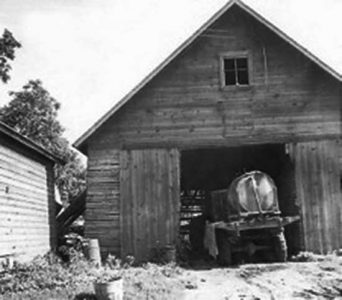
When he could get Model A pickups for $25, he tried to keep a couple ahead so when one gave out, he had another. Also he could tell my mother he had a use for them he wasn’t just bringing home Model A’s. But he would not use them; he thought they were too good for chores.
He later started using Model AA trucks. He put a 500-gallon water tank on one. It would take the load without breaking everything up. He used that system until he quit farming with hogs.
This was back in the family farming days when you could raise a family and pay for a farm with 200 to 400 hogs a year with a fraction of the stench, if you did not try to keep up with the Joneses and had the intuition to keep third-hand equipment working, making do with what you have. FC
Richard Stout lives in Washington, Iowa. He is assisted in his writing endeavors by his granddaughter, Ashley Stout.


