
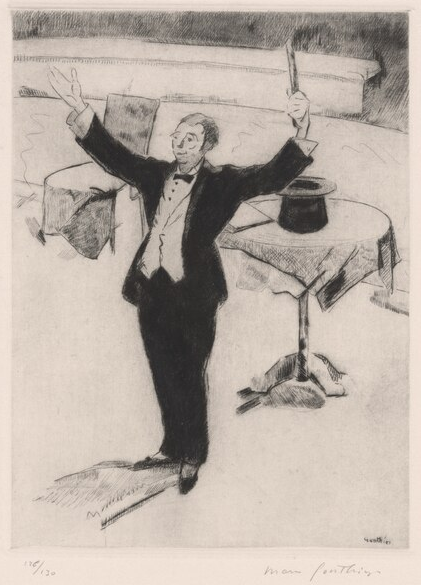
In 1856 Henry Hiram Riley (1813-1888) published a book titled, “The Puddleford Papers,” in which he humorously described the characters and the antics of a fictitious community on the frontier of the then “far west,” which was Illinois in the 1830-40 period. Today, everyone has access to a bewildering array of entertainment. This wasn’t true in the nineteenth century, and folks in isolated rural communities flocked to see, and were grateful for, any unusual occurrence to break the monotony of life. These occasions also provided fodder for conversation throughout the following weeks.
Mr. Riley describes one of these exciting events:
Word spread that a “fire-eater” was soon to visit Puddleford, and he positively turned the little town topsy-turvy. He boiled eggs in a hat, ate flaming tow cloth and pulled ribbons from his mouth; swallowed swords, point foremost, and did other astonishing things, which completely upset the brains of the Puddlefordians, and they began to think that he had been sent by Satan himself.
There had never been such a crowd at Puddleford for any purpose as assembled to see the wonderful performance of this fire-eater. Mrs. Bird, Mrs. Longbow, Mrs. Beagle, Mrs. Swipes, Aunt Sonora, and a few more of the female aristocracy of Puddleford, occupied the front seats, while the background was composed of a very miscellaneous sort of people.
The performance began with sword-swallowing and it was exceedingly fearful to hear the screams of the women, when the performer had a sword half down his throat.
“What is he a-goin’-ter to do?” exclaimed Mrs. Bird.
“O, murder!–mur-der!” screamed Aunt Sonora, jumping from her seat.
“O, twitch it out quick–he’s cho-kin’!” gasped Mrs. Swipes.
“See him!–see him!” exclaimed a dozen voices at once. “Stop him!” “Run!” “‘Tis goin’ right straight inter his throat.” “He’s dyin’! How his eyeballs glare!” “Squire Longbow!–run–run–you’re a peace officer–don’t see him die!” “There! O, dear me–’tis gone down–it’s outer sight–he’s swaller’d it now.” “He’s got it inter him, mor’n three feet long.” “How it must cut!”– “I see it–he’s pullin’ it up agin.” “I can jest see the tip end –but there ain’t no blood on’t.” “O, dear me–whoever heer’d of a man swallerin’ a sword afore!” “How his in’ards must feel!” And so on, keeping the house in a tempest of noise and alarm.
When the performer, however, began to run his “ribbon factory,” as he called it, the women recovered from their fright, and were in high glee, particularly during the preliminary remarks, and during the tow-stuffing exercises. He was a very funny man, and said a host of very funny things. He threw himself into many strange shapes, twisted his face out of form–looked gay and looked solemn by turns, and kept the house in a continual burst of merriment.
Mrs. Bird declared “she should die a laffin’.”
Aunt Sonora said “it seemed as if her sides would split right open.”
Mrs. Swipes said “she know’d that it did beat all–he was the oddest critter that ever com’d into the settlement.”
Squire Longbow said little. He sat and shook his sides. “It was as good as anything he ever see’d and he was glad the man had come so far jist to amuse ’em a little.”
But when the man deliberately set fire to the tow, and his mouth all ablaze, the screams commenced again.
“He will burn up–he will burn up!” said one.
“He’s all-on-fire!” another.
“How the sparks do fly out of his mouth!”
“O–d-e-a-r! Take him some wa-ter!”
“I say, mister,” exclaimed Squire Longbow, who had become really frightened when he saw the man positively burning up–“Don’t it burn, mister? Don’t you want some help?”
The man answered by blowing a stream of sparks out of his mouth straight at the Squire, who started back in terror, and overset Mrs. Longbow, who uttered an unearthly scream.
The fire flickered out at last, and order was restored.
The final exercise was cooking eggs in a hat. The performer had politely borrowed the Squire’s hat, saying, “it would be great favor to him for the loan of it for a few moments.”
Now the Squire’s hat was a most remarkable hat. It was a broad-brimmed affair, “raal beaver,” he said, which he’d worn mor’n twenty years. He bought it down on the “Susquehannas,” and had watched over it with sacred care ever since he had owned it. He wore it on Sunday, Fourth of July, and on all special occasions. He kept it the rest of the time in a closet covered with a piece of “ile-cloth.”
The hat was set upon the floor beside a basket of eggs, and the performer, bowing gracefully, said he would cook a dozen eggs in the Squire’s hat.
“What!” exclaimed the Squire.
“Keep easy, sir!” said the man.
“Cook eggs in my beaver hat?”
“Yes, sir! Cook ’em!”
Squire Longbow was very much excited, and had turned very red in the face–but perhaps the showman was “a-tryin'” to scare him, he would wait a little and watch him closely.
“And now,” said the performer, “This egg is a real egg–and now you see me break it right into that hat–there it goes!”
“I paid twenty-five dollars for that hat!” ejaculated the Squire, filled with fury, and jumping towards the performer, with his fist doubled. “You’re a great scoundrel, sir–you borrow’d that hat, sir–my name is Longbow, sir–Squire Longbow, sir–that’s my beaver hat, sir–twenty years old, sir–cost twenty-five dollars, sir!”
“And there goes another,” continued the performer, amid the stamping and roars of the audience, breaking another egg into the Squire’s hat, in the coolest manner possible, disregarding the tempest around him.
“I call upon you all to witness!” continued the Squire; “I’ll ish-er a warrant for you, sir–I’ll have you up, sir–before me, sir–you’ll be imprison’d–you’ll go to jail, sir–you won’t spile any more people’s hats, sir–you won’t bile eggs, arter this, sir–it’s your last bilin’, sir–”
By this time the smoke and the smell of cooked eggs was rising from the Squire’s hat and it, so they all said, was “gone for sartin.”
“La!” exclaimed Aunt Sonora, “what wicked critters these performers are; to ruin a good hat–a-bilin’ eggs in it!”
The performer duly returned Squire Longbow’s hat, after he had concluded his wonderful experiment of cooking eggs, but the old man looked upon it with suspicion. He turned it over and over, and smelled of it, but declared, at last, that it was his old beaver, and jest as good as new; whereupon he apologized for getting angry but it “was the first time he ever see’d the trick done–but now he know’d the man was a gentleman, every inch on him.”
In my humble opinion, the magician’s stunts were much better entertainment than the trash we devour today on TV.


