
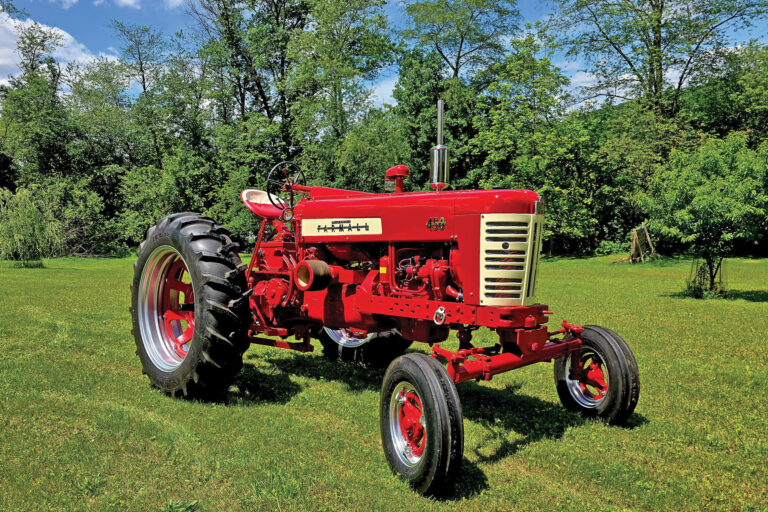
Some tractors are remembered for the work they did. Others are remembered for the way they look. The Farmall 450 manages to be both.
Introduced during a time when International Harvester blended function with style, the Farmall 450 carries long, smooth lines that still turn heads today. I’ve always admired the 450 for that reason. So, when a rough one appeared in an online marketplace listing late one night, it immediately caught my attention.
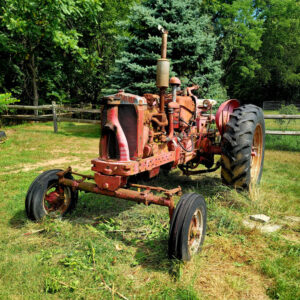
The tractor wasn’t running. It sat in pieces, worn, dented, rusted, and clearly altered over the years. The engine was seized, and many would’ve considered it a parts tractor. I saw something different. I saw an opportunity to bring a classic back the way it deserved.
After some late-night messages and early-morning follow-up, a deal was made. With my family in tow, I headed out with a truck, trailer, winch, and straps to bring the Farmall home. Loading proved challenging due to fully loaded 16.9-by-38-inch rear tires and rear weights, but with careful positioning and patience, we got it secured.
The drive home was slow and deliberate, limited to about 40mph to prevent trailer sway caused by the rear tires. It wasn’t fast, but it was safe – and by the time we arrived, the excitement was already building.
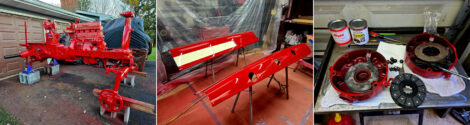
Once unloaded, the true condition of the tractor became clear. The engine couldn’t be freed, so I planned a full rebuild. Several valves and the #3 cylinder were also seized, but after a complete teardown, cleaning, honing, new bearings and rings, a 45-degree valve job, and new valves and guides, the engine was ready to run again.
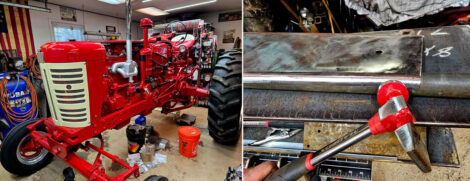
Before fully disassembling the rest of the tractor, I started it up and took it for a drive. Hearing it run confirmed the effort was worthwhile. From there, the restoration moved forward with attention given to every system – rom throttle and governor linkage repairs to replacing worn seals and components throughout.
Paint preparation was approached with the same care. After primer, IH red was applied with high-gloss hardener for durability and protection. Countless parts were cleaned, prepped, and painted individually. A new wiring harness restored the electrical system and made reassembly straightforward and reliable.
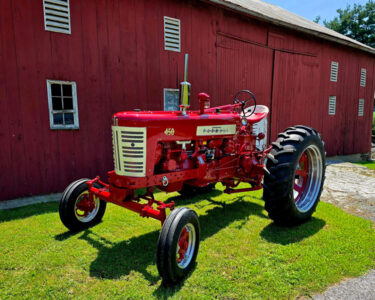
The tractor was fitted with new 15.5-by-38-inch rear tires and fresh three-rib fronts before attention turned to the sheet metal. Dents were removed, bends straightened, and repairs made before multiple rounds of primer, sanding, and final paint. The finished red-and-white color scheme brought the Farmall back to its original character.
Final assembly included installing new emblems, decals, and sheet metal. Standing back and seeing the completed tractor shining in the sun made every hour of work worthwhile.
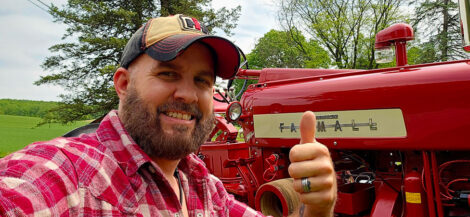
Restoring this Farmall 450 wasn’t just about fixing an old tractor – it was about preserving a piece of agricultural history. Machines like this helped shape farms and families across the country, and keeping them alive ensures their stories continue. FC
The entire restoration process, from teardown to final assembly, is documented on my YouTube channel – Bourbon, Beer, Tractors and Prepping – where I share the journey of bringing old iron back to life.


