
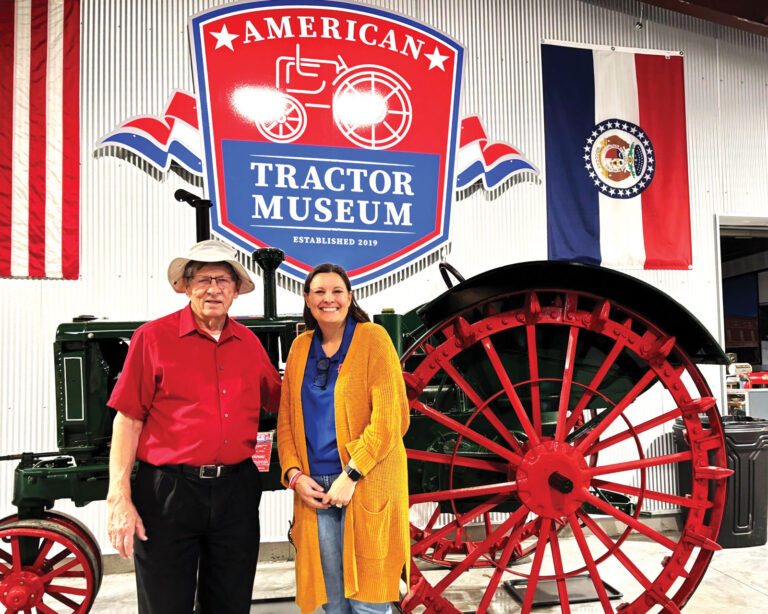
The American Tractor Museum in Perryville, Missouri, continues to grow and attract visitors with its dedication to agricultural history. In June 2023, the Museum broke ground on a 12,000-square-foot expansion, nearly doubling its size and allowing it to display a total of 146 tractors.
The American Tractor Museum first opened its doors in August 2020, thanks to the vision of Arley Berkbuegler and Kenny Buchheit. Arley, a skilled iron worker with a steam engine certification, partnered with Kenny, a second-generation leader in Buchheit, Inc. Together, they curated 80 years of tractor innovation, spanning from the 1890s to the early 1970s, and enhanced the exhibits with outstanding artwork and presentation.
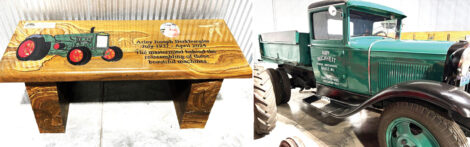
Kenny Buchheit’s agricultural experience dates back to his childhood, where he participated in threshing grain and acquired his first tractor around 2000. Over the next 25 years, Kenny built a collection that eventually became the heart of the Museum, opening it to the public in 2020 when the right location became available. Sadly, Arley Berkbuegler passed away in April 2025, but his legacy continues within the museum’s walls.
The Museum’s Home
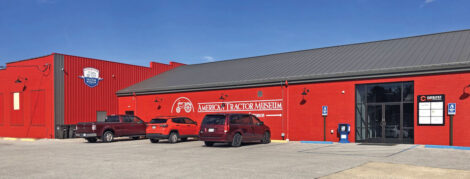
Perryville, Missouri, with a population of 8,600, serves as the home of the American Tractor Museum. Located just seven miles west of the Mississippi River and 70 miles south of St. Louis, Perryville is easily accessible via Interstate 55. The city and Perry County are named after Commodore Oliver Hazard Perry, a hero of the War of 1812. Perryville is noted for its abundance of churches, its reputation as Missouri’s “Best Place to Live,” and its welcoming community, despite their high school sports teams being called the Pirates.
Parade and Recognition
In September 2025, Kenny and Rhonda Buchheit served as Grand Marshals for the East Perry Fair parade. Renowned broadcaster, Max Armstrong, known as “The Voice for American Agriculture,” participated by driving his restored Farmall Super M tractor, a centerpiece in the Museum’s new addition. Let’s peek at some of the tractors displayed on the new floor space.
Farmall Super M
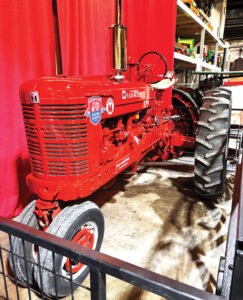
The Museum proudly exhibits 13 Farmall tractors ranging from 1931 to 1959. The Farmall M, produced from 1939 to 1954, was the first of the “big tractors.” The Farmall M succeeded the Farmall F-30. It featured a row-crop three-bottom plow design, offering 31hp on the drawbar and 35hp on the belt. The IH C248 engine was an inline, overhead valve, four-cylinder model with a six-volt electrical system. The transmission produced five forward and one reverse speed, and all Farmall M tractors had hydraulic lifts. The rear wheels were adjustable from 52 to 88 inches, and the 1953 price was $2,400.
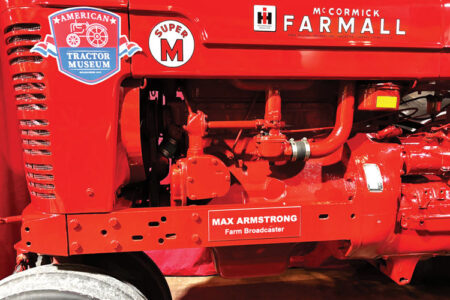
The Museum’s star Farmall is the Super M acquired from Max Armstrong in August 2025. This 1953 International Harvester Super M was featured in the 2010 Classic Farm Tractor Calendar and restored by the International Harvester Collectors Club Northern Illinois, Chapter 2. Over the years, the Super M line received upgrades including a larger cylinder bore and aluminum pistons, producing 44hp on the drawbar and 47hp on the belt. It was manufactured only from 1952 to 1954.
Ferguson-30
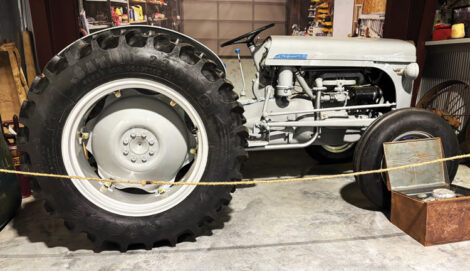
The 1951 Ferguson-30, known as Arley’s tractor, has a rich history. Arley’s grandfather, Frank Seibert, purchased it new in 1950 in Du Quoin, Illinois. It was used on Frank’s farm until 1979, when he replaced it with a Massey Ferguson 135. Brian Toler owned the tractor from 1979 until its donation to the Museum in 2025. Brian recalls his grandfather maintaining the tractor with a putty knife and bucket of grease. Arley’s final project was restoring this tractor, a process documented in a video available on the Museum’s website. The Museum also displays a 1950 Ferguson TO20 and a 1956 Ferguson F-40.
Uncle Sam C-20
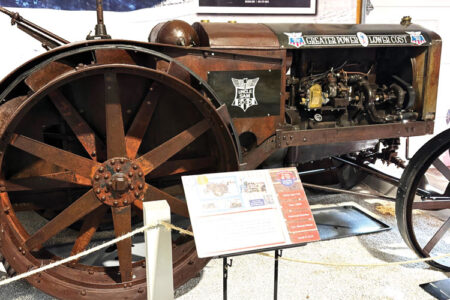
The Uncle Sam C-20 is an exceptionally rare tractor, with only two known to exist. Built in 1920 in Menasha, Wisconsin, it evokes post-World War I patriotism and features the innovative Badger air start system, which uses compressed air for reliable engine starts in cold weather. This tractor spent much of its life in Montana and has a rebuilt 1920 U.S. Beaver engine, a new steering wheel, Bennett vaporizing carburetor, and Dixie magneto. The Uncle Sam C-20 was a 20hp kerosene-powered tractor with field traction steel lug wheels, representing one of the many short-lived brands from the 1910s tractor boom.
John Deere 430C Crawler
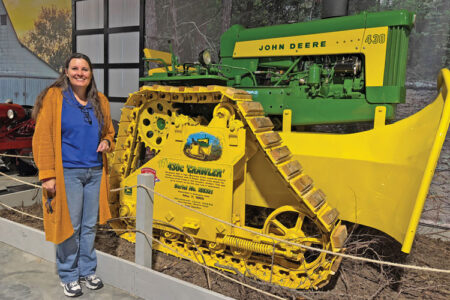
The 1959 John Deere 430C Crawler, introduced in 1958, features a tracked undercarriage for improved traction and stability on tough terrain. Powered by a 2-cylinder 30hp gasoline engine, this crawler was designed for construction, forestry, and farming on hilly ground. The 430C demonstrates John Deere’s effort to diversify beyond traditional row-crop tractors.
Allis-Chalmers WD
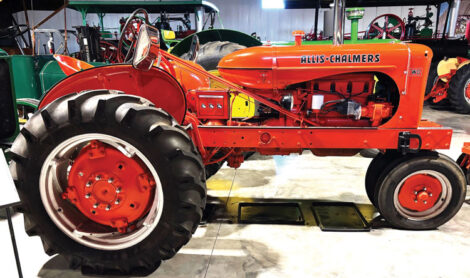
The 1952 Allis-Chalmers WD was donated to the Museum in 2024. WDs were manufactured in West Allis, Wisconsin, from 1948 to 1953. Equipped with a 3.3-liter engine and burning regular gasoline fuel, it’s praised for its durability and performance. The tractor offers four forward and one reverse speed, a three-point hitch, manual steering, and brakes. Despite lacking modern features, its sturdy construction and ease of use make it a favorite among collectors and farmers.
Eagle Model 6
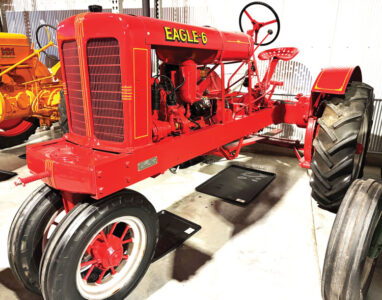
The 1938 Eagle Model 6 features a six-cylinder Waukesha engine and was designed during the shift from horse to mechanized farming. Known for its solid construction and unique airplane-style nose cone, Eagle tractors were distinguished by their sheet metal styling. Despite their outstanding quality, Eagle could not compete with larger manufacturers, and production ceased in the early 1940s. Restored Eagle Model 6s are rare collector’s units today.
Oliver Tractors
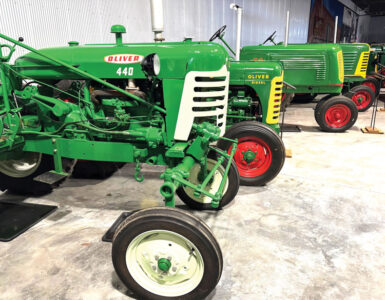
The Museum’s Oliver collection includes eight tractors from the 1956 Super 55 to the 1965 Oliver 1550. The Super 55, introduced in 1954, met the demand for lightweight, multi-purpose tractors. The Oliver 440, produced in 1958 and 1959, excelled in loader work, mowing, and light tillage, and was built by Cockshutt in Canada as a rebranded Cockshutt 540. Reliable and easy to maintain, these models were popular on small farms and orchards.
Minneapolis Steam Engine
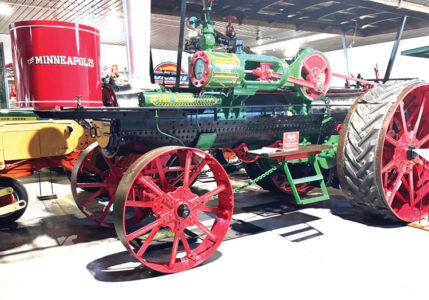
Built in 1917, the Minneapolis Steam Engine #8648 powered heavy-duty tasks such as plowing and threshing. These steam engines remained common until the 1920s, featuring large boilers and steel wheels for traction. They could burn coal, wood, or straw and were retired as gas and diesel tractors became dominant in mid-century agriculture.
Hart-Parr 18-36
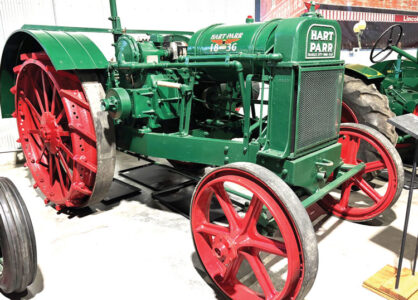
The 1929 Hart-Parr 18-36, powered by kerosene, delivered 18hp on the drawbar and 36hp on the belt. Its large 2-cylinder engine was known for its slow pull and distinctive sound. Hart-Parr merged into Oliver in the 1930s, and the American Tractor Museum displays three Hart-Parr tractors.
Cockshutt 550
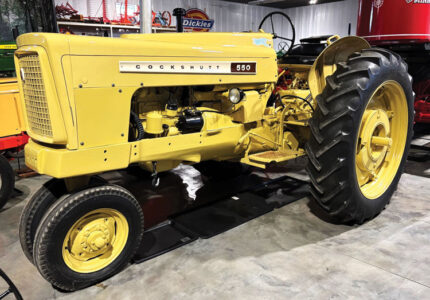
The 1959 Cockshutt 550, built in Brantford, Ontario, introduced hydraulic draft/depth control to reduce field slippage. With 2,930 units produced, it featured various front-end options and optional power steering. Powered by a 3.2L Hercules engine, it was available in gasoline or diesel. Cockshutt pioneered live PTO systems for better operational control. The original Cockshutt 550 is a prized collector’s tractor.
Worthington Lawn Tractor Model B
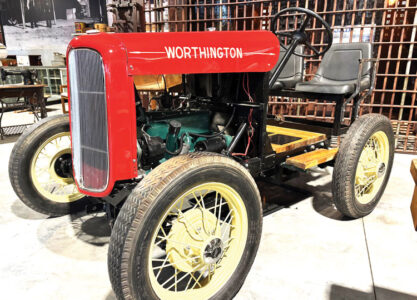
The Worthington Mower Co. produced lawn tractors from the early 1920s to 1959. Charles Campbell Worthington (1854-1944) designed the mower after sheep failed to maintain his golf course. During WWII, Worthington tractors were used to tow planes and bomb trailers at airfields. Arnold Palmer drove a Worthington mower as a boy on a local golf course.
Tillsoil 18-30
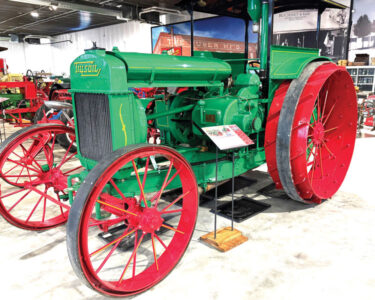
The Tillsoil 18-30, produced around 1920, represents the brief post-WWI tractor boom. Intended for heavy tillage and belt work on open farmland, it followed the era’s naming conventions and design standards. Information about Tillsoil is limited, as the brand faded during industry consolidation. The Museum’s Tillsoil is one of six known to exist.
TO-RO Motor Cultivator
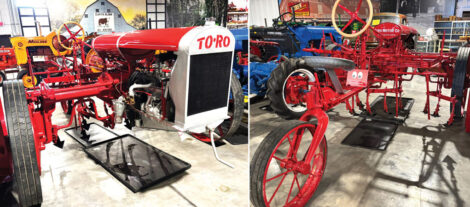
Made in 1919, the TO-RO Motor Cultivator was one of the earliest motorized walk-behind cultivators designed for garden and small-plot farming. It was built by the Toro Motor Co., which later became famous for lawn and turf equipment. Dealers targeted vegetable growers and market gardeners transitioning from horse-drawn cultivators. The TO-RO was a compact, gasoline-powered unit, with small front wheels and rotating cultivator tines at the rear. It offered an early glimpse of mechanized hand cultivation long before modern rototillers became common. Although it wasn’t widely adopted due to cost and limited power, it stands as an important piece in the evolution of powered hand tools in agriculture.
Speedex FG
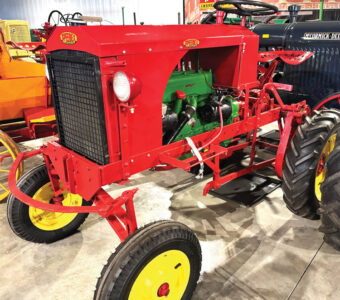
The 1941 Speedex FG was among the first American compact garden tractors, designed for small farms and gardens. It featured a single-cylinder engine and simple, rugged construction. Speedex’s innovations made personal-use tractors accessible, mechanizing chores and becoming a favorite among garden tractor enthusiasts.
John Deere Model A (Unstyled)
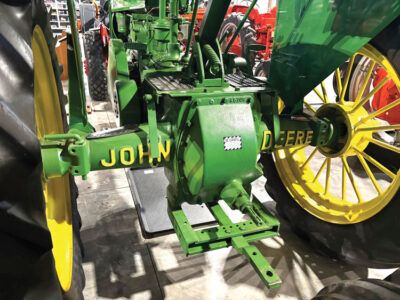
Introduced in 1934, the John Deere Model A was the company’s first row-crop tractor. The 1937 unstyled version was the last before the introduction of a more modern, styled design in 1939. With adjustable wheel spacing, a 2-cylinder engine, and up to 16.2hp on the drawbar, the Model A became a cornerstone of John Deere’s lineup, mechanizing Midwestern farms and remaining in production until 1952.
Titan 10-20
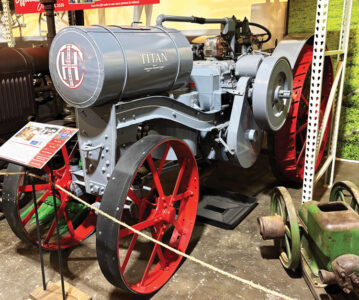
The Titan 10-20, introduced in 1915 by International Harvester, was crucial for medium-sized farms during WWI and into the 1920s. Its kerosene-burning two-cylinder engine and steel wheels with cleats made it effective for fieldwork. The Titan 10-20 helped transition farms away from horses and paved the way for future IHC designs, eventually succeeded by the Farmall line.
Note: The display card stands in front of the Titan 10-20. Additional information about each tractor in the Museum can be accessed by scanning the QR code on the signs.
John Deere AR (Styled)
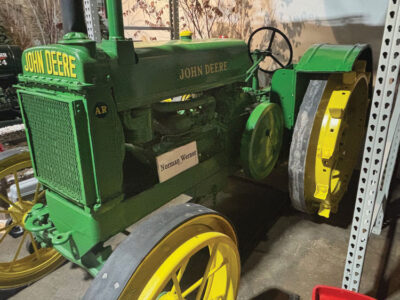
The 1936 John Deere AR was the standard-tread counterpart to the Model A, built for general farm work. It featured John Deere’s iconic two-cylinder engine and a wider stance for stability. Early models had steel wheels, with rubber tires later available. The AR remained in production until 1953, valued for its affordability and rugged design.
Little Bull 5-12
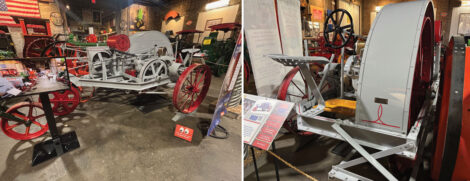
The Little Bull 5-12, produced in 1913, was the first commercially produced small gas engine tractor. Once holding 38% of the U.S. market, it featured a Toro-gas opposed two-cylinder engine with 5hp on the drawbar and 12hp on the pulley. Its unique design included a large traction wheel and an adjustable rear wheel for leveling. The Museum displays a 1913 model weighing 4,000 pounds that originally sold for $395 cash. Advertisements compared its cost to that of a horse.
Case 10-20
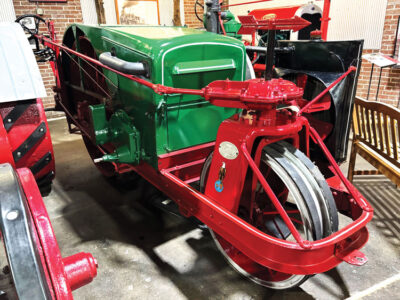
The 1918 Case 10-20, built by J.I. Case Threshing Machine Co., was designed for small to medium-sized farms. A horizontally opposed kerosene engine powered the Case 10-20. The tractor’s steel-spoked wheels and simple design helped farmers transition from horse-drawn equipment to gasoline-powered machinery. Today, surviving examples are rare and prized for their historical significance.
Century Tractor Club
The American Tractor Museum established a Century Tractor Club website, where users can add their tractor information and view the collection. Submissions can be made online or via printed forms, and contact information is kept private. The Museum may reach out for additional details about submissions. As the name implies, the Museum is looking for tractors that are 100 years old.
Museum Décor and Visitor Experience
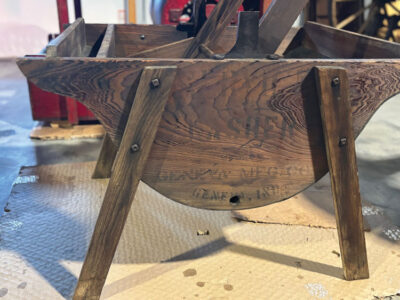
The Museum offers a marked path with information panels and QR codes for in-depth learning. Pedal tractors are displayed on wall shelves, and the American Tractor Museum is clean, well-lit, climate-controlled, and inviting. Unused tractor parts serve as wall decorations, while dioramas add artistic flair.
Visitors may take self-guided tours using their phones, setting their own pace for viewing and photographing exhibits. A written tour guide is available to focus only on tractors of interest. The Museum continuously adds videos and new content, allowing guests to explore exclusive exhibits.
The Museum website provides ticket information, hours, and a downloadable brochure. Admission is $10 for adults, $5 for children ages 6 to 13, and free for those under 5. Group tours are welcome, with discounted pricing, and visitors can spend several hours exploring the collection.
Contact Information: American Tractor Museum, 508 N. Main St., Perryville, Missouri 63775, Phone: (573) 250-2219 Email: info@americantractormuseum.com


